
Electric motors, pumps, conveyors, gearboxes, presses and packaging lines — from five different build years and six different manufacturers. No one knows for certain which lubrication point was or wasn’t serviced last week. SKF lubrication systems bring that back to one manageable whole: the right amount, at the right moment, provably. Euroquip designs, installs and maintains them — machine by machine, in the order that pays off fastest.
Official SKF partner · Certified installation · Retrofit on existing machines · Phased rollout possible · Service across the full Benelux
Why manufacturers across the Benelux work with Euroquip
- ✅Official SKF partner — direct access to the full SKF and SKF Lincoln range, technical support and warranty terms.
- ✅Certified installation of lubrication systems — from system design and piping to commissioning and training your team, even on machines that have been running for ten years.
- ✅We work with mixed machine fleets — different build years, different manufacturers, no uniform documentation. We count the lubrication points and record them, even when the original manual can’t be found.
- ✅Phased rollout, not a big bang — we propose a sequence in which every step pays for itself and stays usable as you continue to grow.
- ✅Advice and maintenance on site — periodic inspection of your lubrication system, refilling, adjustment and fault follow-up through a single point of contact across the full Benelux.
Frequently asked questions
Four levels of lubrication:
where does your fleet stand today?
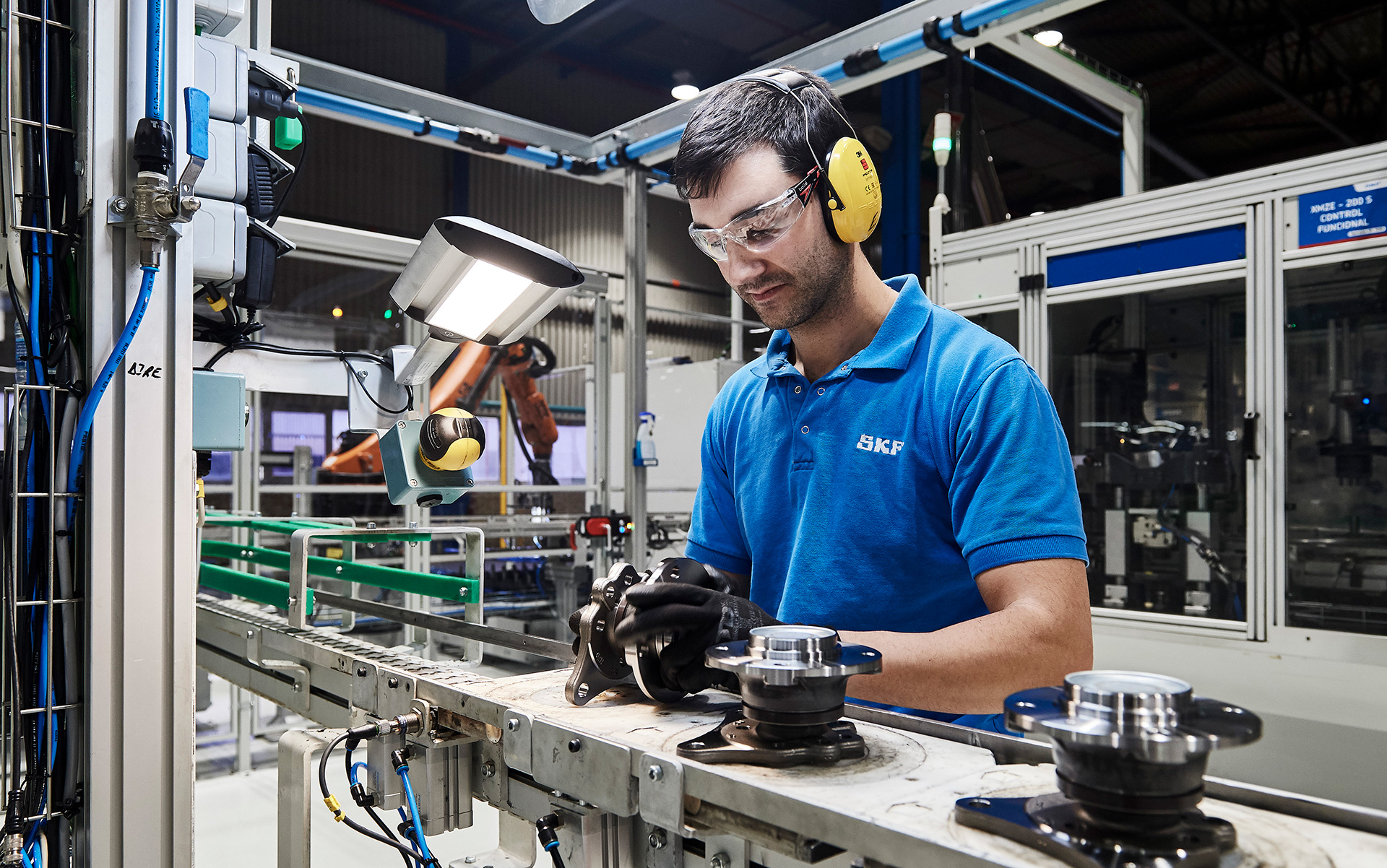
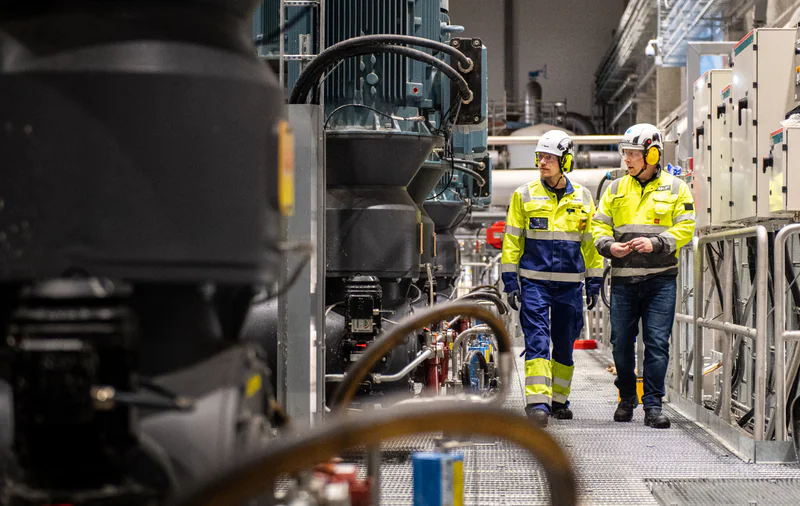
In a mixed machine fleet, every level of lubrication is usually in operation at the same time. An old press serviced monthly with a grease gun, next to a packaging line from 2022 with a central pump. That doesn’t have to be a problem — as long as you know which machine is at which level and why. SKF builds the four levels modularly, so you can grow without replacing everything.
| Manual | Semi-automatic | Fully automatic | Connected | |
|---|---|---|---|---|
| Investment | low | moderate | higher | higher |
| Number of components | very limited | limited | system | system |
| Installation complexity | none | limited | design required | design required |
| Lubricates during operation | generally not | limited | yes | yes |
| Lubrication reliability | low | moderate | high | high |
| Maintenance effort | high | limited | virtually maintenance-free | virtually maintenance-free |
| Fault detection | only once damage occurs | mechanically visible | via system + level alarm | real-time + early warning |
| Provability | paper logbook | paper logbook | system-driven | digital logbook |
Lubrication solutions per machine type in your production environment
A mixed machine fleet is rarely organized by brand, but it does organize well by function. Below are the four groups Euroquip is asked about most often, with the critical components and the matching SKF solution. The exact number of lubrication points varies widely by manufacturer and model; the ranges given are indicative and are counted during the scan.
Lubricants and diagnostic tools for a mixed machine fleet
A lubrication system is only as good as the lubricant running through it. In a mixed fleet, the pitfall isn’t too few types of grease on the shelf, but too many — often with no one remembering why anymore. Below are the four building blocks Euroquip uses to bring that down to a workable number.
SKF LGMT 2 and LGEP 2 — the base of your grease range
LGMT 2: this is thé standard for anything with no special load, temperature or environment involved.
LGEP 2: for general applications under heavy conditions and vibration. SKF names heavy machinery, vibrating screens, crane wheels and jaw crushers as typical applications, among others. In a mixed fleet, this is usually the second grease alongside LGMT 2.
Why this matters: together, these two greases cover the entire floor. They’re also available in 420 ml cartridges (AECP pump & grease gun). So you only manage two variants for all your applications.
SKF LGWA 2 and LGHB 2 — where the base falls short
LGWA 2: premium grease where the temperature falls outside LGMT 2’s range (up to peaks of 220 °C) and water resistance is put to the test. Ideal for extraction installations in hot production environments.
LGHB 2: high-viscosity grade. Extremely resistant to high temperatures and extreme loads, and also very well pumpable in centralized systems with very long pipe runs and high back-pressure.
SKF determines via LubeSelect exactly which grease fits which bearing. We add that outcome to your complete Euroquip lubrication plan.
LHMT 68 and LHHT 250 — chain oils
Oil that gums up in dust forms a lacquer layer. That increases tension, wear and energy consumption.
LHMT 68: for chains at average temperatures. Penetrates excellently and is silicone-free.
LHHT 250: for dryers, ovens or extremely hot zones. Works up to as high as 250 °C and also dries completely residue-free.
Application method: brush lubrication is cheap but wears. Spray lubrication applies “pitch by pitch” in a fine mist onto the link and can be perfectly calibrated, without touching the chain or leaving dirt behind.
Diagnostic and dosing tools
SKF TLSD single-point lubricator: ideal and inexpensive to deploy on remote pumps, fans or motors. With the DialSet app you know instantly how to set the lubrication pattern to prevent under- and over-lubrication.
SKF Lincoln 1882-E: highly efficient manual lubrication. The Powerluber cordless gun communicates with the ultrasonic TLGU-10 and tells you exactly how many grams of grease went into the fitting.
SKF eLube app: wireless system diagnostics via your smartphone for all connected CLP/P253 Smart pumps and controllers on your shop floor.
Start with the machine that costs you the most
One machine is enough to start with. We map the lubrication points, calculate what the current approach costs you annually and propose, per machine, the level that pays for itself fastest.
Do you also work with large oil systems in your plant — hydraulics, gearboxes, circulation oil? Then also check out SKF RecondOil for circular oil use.
Response within two working days · On-site scan · Service area: Belgium, the Netherlands and Luxembourg