
Lubrication that keeps your paper machine running — from wet end to reel

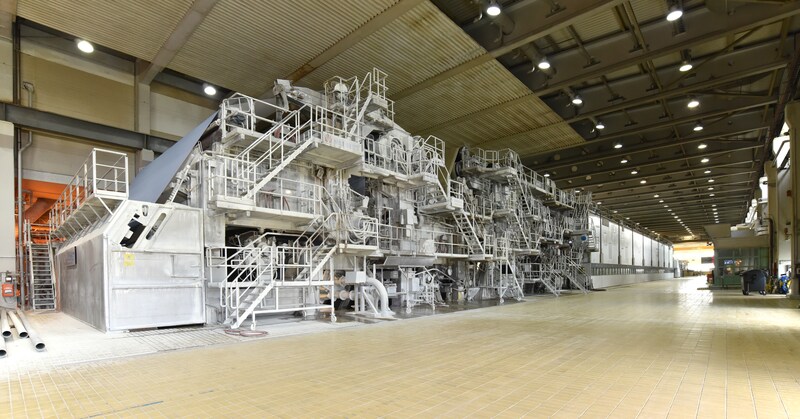
A paper machine doesn’t stop section by section. If one bearing point fails, the entire line stops. SKF lubrication systems bring hundreds of lubrication points under one controlled dose — resistant to water and washout on the wet side, to heat on the dry side, and accessible without anyone having to climb to height. Euroquip designs, installs and maintains them on your machine.

Official SKF partner · Certified installation · Stainless-steel version for wet zones · Installation during scheduled shutdowns · Service throughout the Benelux
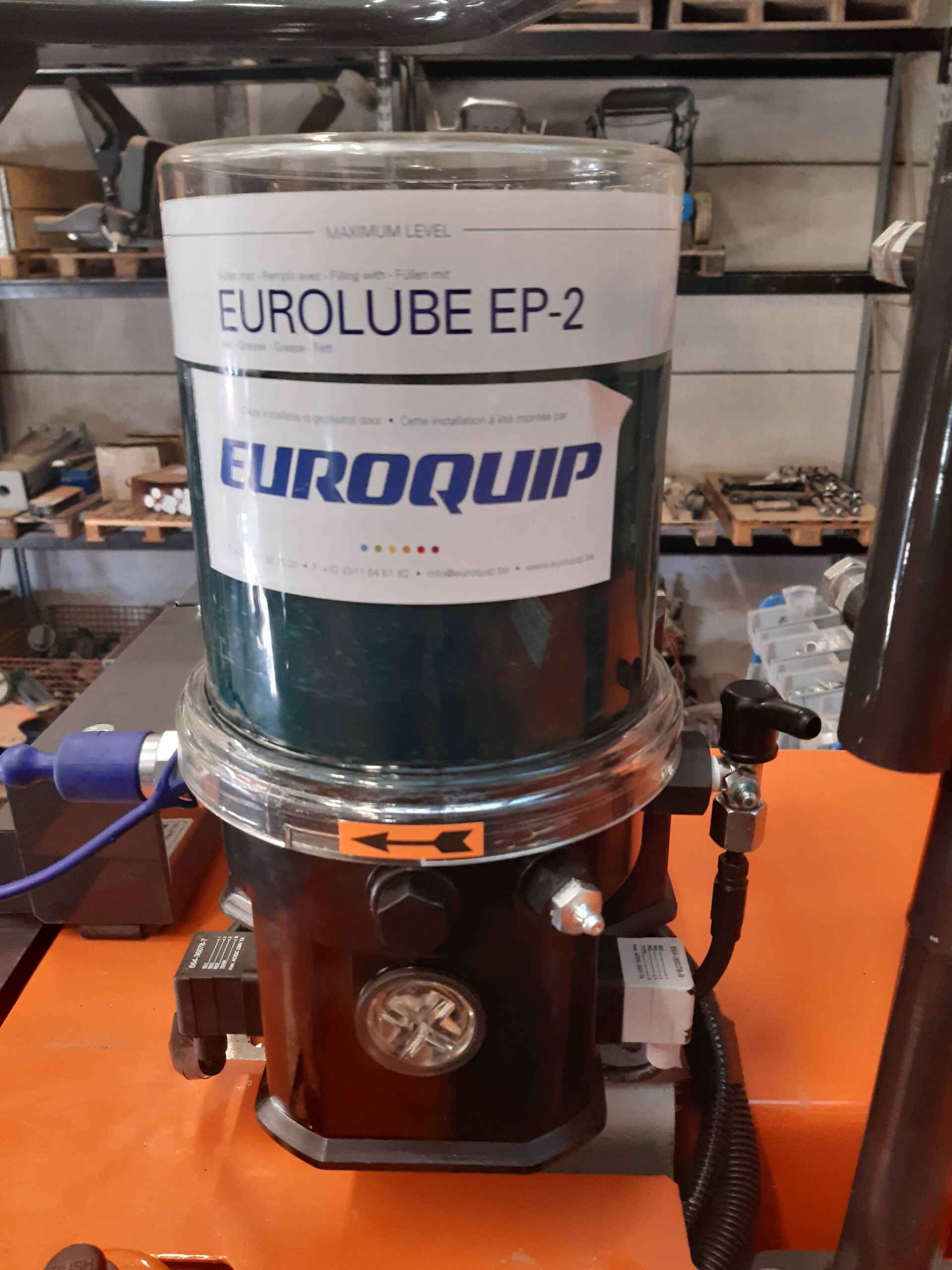
Smeersystemen voor papier en pulp

56%

of premature bearing failures are caused by contamination and poor lubrication

More than half of your bearing damage is therefore a lubrication problem, not a bearing problem.

up to 33%

less lubricant consumption

By switching from manual to automatic lubrication. Less grease, precisely dosed, at the right moment.

15–20 min

per machine per maintenance cycle

That’s how long correct manual lubrication takes. Automation gives that time back to your technicians — and to your production planning.

40–60%

of your maintenance costs stem from poor lubrication

While lubricants themselves account for only 2 to 3% of your operating costs. The ratio between effort and impact is rarely this lopsided.

Why paper and board producers in the Benelux work with Euroquip

  • Official SKF partner — direct access to the complete SKF and SKF Lincoln range, technical support and warranty terms.
  • Certified installation of lubrication systems — from system design and stainless-steel construction for wet zones to piping, commissioning and training your team.
  • We know continuous operation — a paper machine doesn’t wait. We plan pre-fabrication and pre-assembly so the effective installation time fits within your shutdown window.
  • We think per section, not per machine — the wet end, the dry end and the stock preparation each get their own system and lubricant choice, in one coherent lubrication plan.
  • On-site advice and maintenance — periodic inspection of your lubrication system, refilling, adjustment and fault follow-up through a single point of contact across the entire Benelux.

Frequently asked questions

The SKF Flowline oil supply unit was developed with the paper machine as its first application. Thanks to the cylindrical stainless-steel reservoir with separation plates, the oil dwell time is shorter, which means the installation needs up to 50% less oil volume than a classic circulation reservoir — with less to buy, less to dispose of and less to store as a direct result.

Sources: SKF publications on lubrication systems, circulation lubrication and lubricants for heavy process industry, including pulp and paper.
Your results depend on machine width, the number of lubrication points and your current lubrication practice — we map this out during a machine scan.

Four levels of lubrication:
where does your machine stand today?

Not every lubrication point deserves the same regime. A gearbox at ground level needs something different from a felt roll ten metres up in the dry end. SKF builds the four levels modularly, so you can expand per section without replacing everything at once. Together with you, Euroquip determines which level pays off fastest per zone.
Level 1 · Basic

Manual lubrication

The right tools for points you deliberately keep manual

  • SKF Lincoln 1882-E — 20 V Li-ion battery grease gun with an integrated grease meter, two flow settings, an operating pressure up to 400 bar (peak 690 bar) and an alarm for a blocked nipple.
  • 1142 / 1151 / 1035 — hand-operated grease guns for points with generous intervals.
  • LAGN 120 — nipple kit with 120 conical nipples, for standardising your lubrication points across the whole machine.

Strengths: low investment, direct control, suitable for points with generous intervals and good accessibility.

Limitations: servicing one lubrication point takes an average of two minutes (including travel time and cartridge changes) in conditions that are damp, up high, and vibrating. Multiply that across a machine with hundreds of points, and the round becomes impossible within your shutdown window. That makes the dosing a gamble: too much grease damages the seal, too little lets it run dry.

Level 2 · Consolidation

Semi-automatic lubrication

Bringing multiple lubrication points together into one accessible point

  • SSV / SSVD — (adjustable) progressive divider blocks.
  • VPK — sectional progressive divider block.
  • Armoured, canvas, polyamide, steel lines — custom-made for your machine layout.

What it delivers: instead of searching for fifteen separate points on a platform or under a frame, your technician lubricates one central point safely at working height. The distribution is mechanical and positive: if one outlet or bearing blocks, the entire block stops and the fault is immediately apparent.

Ideal for: lubrication points at height, points in the wet end where you’d rather not stand, and zones where you don’t yet want to make the leap to fully automatic. This is a logical first step towards connecting a pump later.

Level 3 · Continuous · Most popular in continuous operation

Fully automatic lubrication

The right lubricant, in the right amount, with no one involved

  • CLP / PLP / P203 — electrically driven compact grease pumps (up to a sectional design with the EDL1 booster pump).
  • SKF Maxilube — an enormously heavy-duty dual-line system. Can smoothly handle up to 2,000 lubrication points over lengths of more than 120 metres (and pressures up to 400 bar).
  • SKF CircOil & Flowline — circulation lubrication that lubricates and cools the bearing at the same time.
  • CLK, CL-501, CL-OS, GIS — chain and oil projection systems for your conveying and drive chains.

Why this matters so much in pulp and paper: Manual lubrication is often only possible when production is stopped; in continuous operation this means risky delays. With automatic lubrication you dose continuously, preventively avoiding washout on the wet side and hardening on the hot side. Your people stay away from the unsafe platforms and moving parts.

Level 4 · Data

Connected lubrication (SKF eLube / IoT)

See what your lubrication system is doing, without stopping the machine

  • CLP / PLP Smart / P253 Smart — connected grease pumps with operating modes: time-controlled, counter-controlled and progressive cycle-controlled.
  • Datalog controller — logs the data and communicates flawlessly via the SKF eLube app.
  • Web Gate, SKF Online SW and E-SMS-C — the ultimate monitoring layer for enormous Maxilube or Flowline installations (alarm confirmation, trend display and SMS alerts to technicians).

What you can do with it:

  • Read fill level and operating status without shutting down the machine or having to physically climb to the pump.
  • Spot a blockage or an empty reservoir instead of only at the next flawed inspection round.
  • Keep a detailed digital logbook for your reliability reporting.

Why this is relevant here: A paper mill runs 24/7 and the most critical lubrication points sit exactly where no one goes unplanned. Remote reading literally replaces that dangerous (and delayed) climbing inspection round.

automatische smering papiermachine, centrale smering pulp en papier, circulatiesmering droogpartij, hogetemperatuurvet lagers, dubbelleidingsysteem smering, SKF smeersysteem papierfabriek, kettingsmering papierindustrie

ManualSemi-automaticFully automaticConnected
Lubrication during operationnot in practicelimitedyesyes
Consistent dosingnopartlyyesyes
Points at heightclimbing requiredbrought to working heightno access neededno access needed
Labour time per cycle15–20 min/machinegreatly reducedvirtually zerovirtually zero
Fault detectiononly once damage occursmechanically visiblevia the systemreal-time + alarm
Traceabilitypaper logbookpaper logbooksystem-controlleddigital logbook

Want to know what your paper machine costs every year in lubrication points that don’t get greased?

Tell us the number of sections, the number of lubrication points and your current lubrication frequency. We convert the labour time, lubricant consumption and avoidable downtime into an annual figure — and set the investment in automatic lubrication alongside it. One hour of unplanned downtime on a paper machine outweighs a whole year’s grease budget.

No obligations. Response within two working days.

Lubrication solutions per section of your paper machine

One paper machine contains four completely different lubrication environments, one after another: soaked, hot, heavily loaded and fast. Below are the four zones Euroquip is asked about most often, with their critical components and the matching SKF solution. The exact number of lubrication points varies greatly by machine manufacturer and configuration.

Wet end and press section


Why it’s critical: This is the zone where standard grease disappears fastest. Pulp suspension and shower water wash the grease out of the bearing while it turns slowly under high load. A seizure here also means more than just that one bearing: the paper web breaks instantly and the entire machine stops.

Critical components: bearings of breast, guide and suction rolls, felt guide and tensioning rolls, bearings of press and suction press rolls, and drive stations.

Indicative number of lubrication points: 60 – 200 per section, depending on machine width and roll positions. (To be validated during the machine scan.)

Typical setup: Dual-line system (SKF Maxilube) or progressive (P203) in stainless steel. Lubricant: LGHB 2 or LGWA 2 — LGHB 2 retains its strength despite enormous water ingress. Because it doses while the roll is turning, the system continuously pushes water out instead of drawing it into the bearing.

Drying cylinders and dry end


Why it’s critical: The mirror image of the wet side: temperature determines everything here. Standard grease saponifies, the oil oxidises, and the bearing runs dry. At the same time, this is where most of the lubrication points of the entire machine sit: dozens of cylinders and felt rolls, mostly behind guards at enormous heights.

Critical components: cylinder bearings, bearings of top and bottom felt rolls, extraction fans and drive gearboxes.

Indicative number of lubrication points: 150 – 500+ across the entire dry end. (To be validated during the machine scan.)

Typical setup: Circulation lubrication (SKF CircOil or SKF Flowline oil supply) is the standard here, because the bearings (due to the enormous process heat) need to be lubricated and cooled at the same time. Specific telescopic SKF return lines or a Flowline Sump Unit ensure the hot oil doesn’t leak into the plant.

Calender and reel section


Why it’s critical: At the end of the machine, there’s no buffer left. A fault in the calender shuts everything down immediately (and produces masses of reject paper). The calender rolls also combine an exceptionally high line load with high peripheral speeds.

Critical components: bearings of the calender rolls, deflection-controlled rolls, hydraulic loading cylinders, drum bearings and drives.

Indicative number of lubrication points: 40 – 120 per calender and reel group. (To be validated during the machine scan.)

Typical setup: Oil circulation lubrication for the roll bearings (paired with a CLP or P203 grease system for the arm bearings). For the rolls, LGHP 2 (high speeds and heat) is indispensable. A connected eLube system (Data level) is perfect here: the warning shows live on your smartphone, well before a roll actually seizes.

Pulping, refiners and reel slitter


Why it’s critical: ‘Stock preparation’ is full of heavy, slow-turning bearings that are permanently contaminated with fibres, filler and chemistry. The reel slitter, by contrast, is full of chains and guides; in practice, the lubrication round that maintenance always skips first (for lack of time).

Critical components: main bearings of pulpers/refiners, drive chains, blade roll bearings and linear guides of the reel slitter.

Indicative number of lubrication points: 30 – 100 per pulper line and 25 – 80 per reel slitter. (To be validated during the machine scan.)

Typical setup: Heavy, slow-turning pulpers require LGEV 2 grease with solid lubricants (MoS₂/graphite). Open gears are treated with spray lubrication. Chains get the fine LHMT 68 / LHHT 250 chain oil injected automatically and precisely, ‘pitch by pitch’, by the CLK projection system.

Do you also work with large oil systems?

Do you use large volumes of oil for hydraulics, gearboxes, or circulation in your processes? Avoid unnecessary oil changes and reuse your industrial oil indefinitely, without any loss of quality.

Lubricants and diagnostic tools for pulp and paper production

A lubrication system is only as good as the lubricant that runs through it. In a paper mill, that lubricant has to handle two opposing tasks: it must not wash out on the wet side, and it must not harden or oxidise on the hot side. Those are rarely the same products.

SKF LGHB 2 — high load, high temperature, water resistance

High-viscosity grease with a complex calcium sulfonate thickener. This grease performs in the deadly combination that is standard in pulp and paper — heavy load, high temperature and water ingress all at once.

Where it excels: It retains its load-bearing capacity, oxidation resistance and corrosion protection despite very significant water ingress (excellent for roll bearings in the wet end).

Typical application: roll bearings in the wet end and press section, heavily loaded positions in the calender and stock preparation.

SKF LGWA 2 and LGHP 2 — the two extremes

LGWA 2: Premium lithium-complex grease with EP properties (for bearings that don’t co-rotate and reach peaks up to 220 °C). Top choice for wet roll conditions.

LGHP 2: High-performance high-temperature grease. The choice for extremely fast-running, hot bearings. Used very successfully in calender rolls and fans around the drying section.

The rest of the general plant lubrication runs flawlessly on the universal LGMT 2 and LGEP 2 cartridges and systems. Euroquip selects the exact grease for each plant zone.

Chain oils and chain lubrication systems

Chain oil that gets hot and turns sticky builds up varnish layers in the links. Those increase the pulling force, accelerate chain stretch and force you to replace the chain well before its intended service life.

LHMT 68: For the mid-temperature range (–20 to +100 °C). The standard choice for all conveying, drive and lift chains. Forms a light protective film immediately.

LHHT 250: Synthetic ester-based chain oil for extreme conditions and temperatures (drying processes) up to as much as 250 °C. Dries completely residue-free: so no varnish or stickiness occurs!

Diagnostic and dosing tools

SKF TLSD single-point lubricator: Ideal for points at height in the dry end (with a LAPT hose extended from 1 to 5 metres) or above dangerous rotors. Placement and inspection are done from the safe platform, while the point itself sits deep inside the machine.

Flowline Unit: This advanced oil-circulation installation uses sensors that trend the water and particle content of your outgoing oil themselves. You see deterioration coming weeks in advance, instead of finding out afterwards.

SKF eLube app & Datalog: Read pump status wirelessly, with early detection of a blockage in the pump or line.

Bring your paper machine to the right lubrication level

Start with one section. We map the lubrication points, calculate what the current approach costs you each year, and propose the level that pays for itself the fastest.

Do you also work with large oil systems — hydraulics, gearboxes, circulation oil? Then take a look at SKF RecondOil for circular oil use.

Response within two working days · On-site machine scan · Service area: Belgium, the Netherlands and Luxembourg


Production
Nutrition
Agriculture
Earthmoving
Transport
Maritime
Paper
Steel
AutomoTIVE
Aviation
Mining
Recycling